Craft Your Perfect Haircare Ritual with ORY

Your Hair, Your Story — Craft Your Perfect Hair Ritual with ORY

At ORY Haircare, we believe your hair routine should be as unique as your hair’s texture, porosity, and story. Our customized routines pair natural, plant-based ingredients with dermatologically studied actives to address your specific hair type and concern — from taming frizz on wavy hair to reviving thinning strands. Whether you’re defining curls, repairing color-treated ends, or calming an itchy scalp, our handcrafted shampoos, conditioners, masks, and scalp treatments are built to work with your hair, not against it. Pair your routine with a custom-engraved bottle for a truly bespoke ritual (Personalization).

ORY personalized haircare routine for healthy hair and scalp care
Smiling woman with wet dark hair massaging nourishing scalp treatment into hair during daily haircare routine

Why Customize Your Hair Routine?

Hair is not one-size-fits-all. Fine, oily hair can be weighed down by the same rich butters that rescue dry, coily strands, and a scalp-clarifying routine for dandruff can strip color-treated hair of its vibrancy. A customized routine ensures every product you use works with your hair’s natural structure — its cuticle tightness, curl pattern, and scalp chemistry — delivering targeted results like stronger strands, calmer scalp, and lasting shine. At ORY, you can choose pre-formulated products or build your own with ingredients like rosemary extract, argan oil, or niacinamide, as detailed in our Inside ORY page. Not sure where to start? Take our upcoming Hair Type & Porosity Quiz or contact our haircare experts at hello@oryskincare.com for personalized guidance.

Know Your Hair: Type & Porosity

Two frameworks help explain why the same product performs differently from one head to the next.

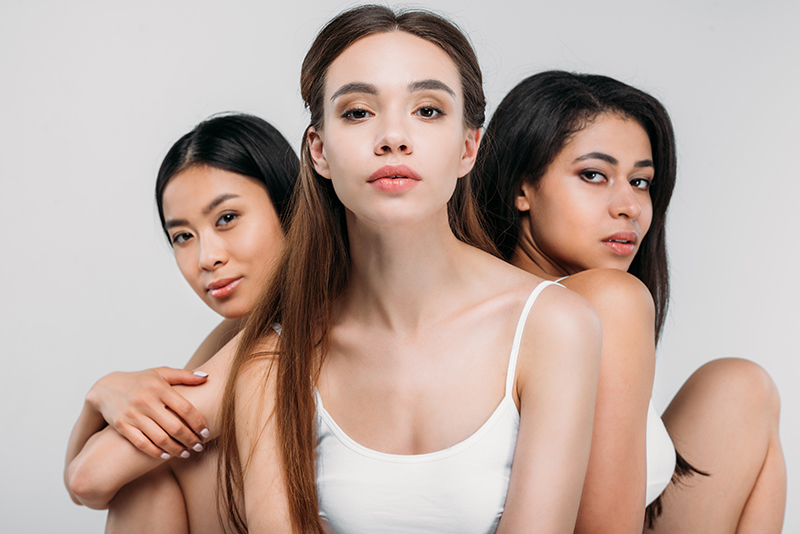
Three diverse women with radiant skin pose together, showcasing smooth, hydrated complexions that reflect ORY Skincare’s emulsifier science and skin-barrier–supporting formulations.

Hair Type (curl pattern):

Porosity (Low / Medium / High):

The widely used Type 1–4 classification (straight, wavy, curly, coily, with A/B/C sub-types for curl tightness) describes the hair shaft’s natural curvature. It’s an industry-standard styling framework, not a clinical diagnostic, but it reliably predicts how a strand holds moisture, product weight, and shape.

Porosity describes how tightly the cuticle — the hair’s outer layer of overlapping, scale-like cells — lies against the shaft. Low-porosity cuticles lie flat and resist moisture penetration; high-porosity cuticles are raised or gapped (often from chemical processing, heat styling, or UV exposure) and absorb — and lose — moisture quickly. This structural mechanism is well established in hair biology; the popular at-home “float test” is a helpful consumer heuristic but hasn’t been validated as a diagnostic tool, so treat it as a starting point rather than a lab result.

How to Use These Routines

Each routine below pairs a hair type or concern with a wash-day order and weekly treatment. A few ground rules that apply across every routine:

1. Wash Frequency

Oily/fine hair generally does best washed every 1–2 days; dry, curly, coily, or color-treated hair typically thrives on a 3–7 day cycle, since over-washing strips the scalp’s natural sebum.

Woman with wet hair during a personalized haircare routine
Woman applying conditioner or hair treatment through wet hair

2. Layer Wisely

Follow the order: clarify (as needed) → shampoo → conditioner → leave-in treatment or mask → heat protectant (if heat styling) → styling product.

3. Scalp vs. Strand

Direct active, cleansing ingredients (like tea tree or salicylic acid) at the scalp; direct rich, emollient ingredients (like shea butter or argan oil) at the mid-lengths and ends, where hair is oldest and driest.

oman massaging shampoo into her scalp during her hair washing routine

4. Mind Your Protein-Moisture Balance

Hair is roughly 90–95% keratin, a structural protein. Protein treatments temporarily patch weak spots in the cuticle, but overusing them — especially on fine or low-porosity hair — can leave hair stiff and brittle (“protein overload”), while too much moisture without protein support can leave it limp or gummy when wet. Rotate protein and moisture treatments based on how your hair feels, not on a fixed schedule.

ory-personalized-haircare-routine-wet-hair.jpg
ory-conditioner-hair-treatment-routine.jpg

5. Heat & UV Protection

Use a heat protectant before any tool above 300°F/150°C, and an SPF-rated hair mist or hat for extended sun exposure, since UV and heat both degrade the cuticle and accelerate protein loss.

6. Weekly Treatments

Use masks, scalp scrubs, or oil treatments 1–2 times weekly, adjusting frequency to your hair’s tolerance and porosity.

Woman with soft, healthy-looking brown hair after her haircare routine

Ready for healthier hair?

Explore the routines below and customize your products

Haircare Routines by Hair Type & Concern

Fine & Oily Hair:

Weightless Balance

Three women with fine hair featuring ORY haircare for oily scalp and weightless volume

Wash Day Routine

  • Cleanser: Rosemary + Green Tea Clarifying Shampoo – removes excess sebum and buildup without over-stripping (Botanical Infusion page).
  • Conditioner: Lightweight Aloe + Niacinamide Conditioner – hydrates mid-lengths while balancing scalp oil (Inside ORY page).
  • Treatment: Witch Hazel Scalp Tonic – tightens and refreshes the scalp between washes.
  • Leave-In / Style: Weightless Sea Salt Spray – adds texture and root lift without residue.

Goals: Balance sebum production, add volume, and avoid product buildup.

Characteristics: Fast-oiling roots, flat texture by day two, hair that looks weighed down by rich products.

Weekly Treatment: Rosemary + Peppermint Scalp Scrub (1x/week) – exfoliates the scalp to prevent buildup and clogged follicles.

Pro Tip: Apply conditioner only from mid-shaft to ends — keeping it off the scalp is the single biggest lever for fine, oily hair (Wash Day Routine).

Wash Day Routine

  • Cleanser: Shea + Argan Moisture Shampoo – cleanses gently while replenishing lipids (Botanical Infusion page).
  • Conditioner: Rosehip + Hyaluronic Acid Conditioner – boosts moisture retention and smooths the cuticle (Inside ORY page).
  • Treatment: Argan + Vitamin E Overnight Oil – coats the cuticle with fatty acids and antioxidants to reduce further oxidative damage.
  • Leave-In / Style: Shea Butter Leave-In Cream – seals in moisture and softens texture.

Goals: Restore moisture, rebuild the cuticle, and reduce breakage.

Characteristics: Rough texture, split ends, dull appearance, tangles easily (often from heat styling, chemical processing, or UV exposure).

Weekly Treatment: Deep Repair Hair Mask (2x/week) – shea butter, argan oil, and hydrolyzed keratin to rebuild strength.

Pro Tip: Apply oil-based treatments to damp, not soaking-wet hair — oils seal in existing moisture better than they add new moisture on their own.

Dry & Damaged Hair:

Deep Repair

Two women with healthy-looking hair featuring ORY deep repair haircare for dry and damaged hair

Curly & Coily Hair:

Moisture & Definition

Three women with defined curly and coily hair featuring ORY moisturizing haircare products

Wash Day Routine

  • Cleanser: Co-Wash: Jojoba + Slippery Elm Cleansing Conditioner – cleanses without stripping natural curl oils; follow with a clarifying shampoo every 2–3 washes to prevent buildup.
  • Conditioner: Marshmallow Root + Honey Conditioner – detangles and hydrates densely coiled strands.
  • Treatment: Flaxseed + Aloe Curl Gel Base – defines curl clumps while sealing in moisture.
  • Leave-In / Style: Shea + Castor Oil Leave-In – layer under gel (“LOC/LCO method”) to lock in hydration before styling.

Goals: Maximize moisture retention, define curl pattern, and minimize frizz.

Characteristics: Naturally drier strands due to sebum’s longer travel down a coiled shaft; ranges from soft waves to tight coils (Type 2C–4C).

Weekly Treatment: Deep Conditioning Mask (1x/week) – apply with heat (a warm towel or cap) to help the mask penetrate the cuticle more effectively.

Pro Tip: Detangle only on soaking-wet, conditioner-coated hair, working from ends to roots, to reduce mechanical breakage on coiled strands.

Wash Day Routine

  • Cleanser: Sulfate-Free Color-Safe Shampoo – sulfate surfactants strip color pigment faster, so a gentler surfactant base helps color last.
  • Conditioner: UV Filter + Antioxidant Conditioner – shields pigment from photo-oxidation.
  • Treatment: Purple or Blue Toning Mask (for blonde/lightened hair) – neutralizes brassy tones between salon visits.

Leave-In / Style: Argan Shine Serum – smooths the cuticle to reflect more light and enhance color depth.

Goals: Preserve color vibrancy, prevent fading, and maintain strand integrity.

Characteristics: Porosity often raised by the chemical lifting process; can be prone to dryness, brassiness, or dullness.

Weekly Treatment: Bond-Building Treatment (1x/week) – targets disulfide bonds broken during chemical processing to reduce breakage.

Pro Tip: Wash color-treated hair in lukewarm, not hot, water — heat opens the cuticle further and accelerates color and moisture loss.

Color-Treated Hair:

Color Protect & Shine

Two women with blonde and burgundy color-treated hair featuring ORY color-protecting haircare products

Frizzy Hair:

Smooth Control

Two women with smooth shiny hair featuring ORY frizz control and anti-humidity haircare products

Wash Day Routine

  • Cleanser: Jojoba + Chamomile Smoothing Shampoo – gently cleanses while conditioning the cuticle.
  • Conditioner: Argan + Silk Amino Acid Conditioner – coats the cuticle in a lightweight film that reduces friction and static.
  • Treatment: Anti-Humidity Cuticle Sealant (lightweight silicone or silicone-alternative blend) – forms a flexible barrier that resists moisture swelling.
  • Leave-In / Style: Smoothing Cream + Diffuser or Blow-Dry Brush – dries hair in a controlled direction to prevent the cuticle from lifting unevenly.

Goals: Smooth the cuticle, control humidity-driven frizz, and add shine.

Characteristics: Raised or uneven cuticle scales that let humidity swell the hair shaft unevenly.

Weekly Treatment: Glossing Mask (1x/week) – argan oil and panthenol to smooth and add reflective shine.

Pro Tip: Microfiber towel or old cotton T-shirt (not terrycloth) to blot — not rub — wet hair, since rubbing roughs up the cuticle and increases frizz.

Wash Day Routine

  • Cleanser: Caffeine + Rosemary Stimulating Shampoo – caffeine has been shown in laboratory (organ-culture) studies to penetrate the hair follicle and counteract testosterone-driven suppression of hair shaft growth.
  • Conditioner: Biotin + Panthenol Strengthening Conditioner – supports shaft flexibility; note that biotin’s benefit is most established in people with an underlying biotin deficiency, which is uncommon with a typical diet.
  • Treatment: Rosemary Scalp Serum – a randomized comparative trial found topical rosemary oil produced hair-count improvements comparable to 2% minoxidil over six months, with less scalp itching reported.
  • Leave-In / Style: Lightweight Volumizing Mist – lifts roots without weighing down finer strands.

Goals: Support scalp circulation and follicle health, and reduce shedding-related breakage.

Characteristics: Widening part line, reduced density, finer-feeling shaft diameter over time.

Weekly Treatment: Scalp Massage with Rosemary + Peppermint Oil (3–5x/week, 5 minutes) – manual massage is independently associated with improved hair thickness in small studies, and peppermint oil increased follicle depth and dermal thickness in an animal model, though human trial data on peppermint specifically remains limited.

Pro Tip: Persistent, sudden, or patchy hair loss can signal an underlying medical condition (thyroid, iron deficiency, hormonal, or autoimmune) — see a dermatologist for a proper diagnosis before relying on topical treatments alone.

Thinning Hair:

Strength & Growth Support

Three women featuring ORY strengthening haircare products for thinning and fine hair

Dandruff & Sensitive Scalp:

Scalp Calm

Two women featuring ORY haircare products for dandruff-prone and sensitive scalps

Wash Day Routine

  • Cleanser: Zinc Pyrithione or Tea Tree Clarifying Shampoo – zinc pyrithione disrupts iron-dependent metabolic processes in Malassezia; a 4-week randomized trial found 5% tea tree oil shampoo significantly reduced dandruff severity, scaliness, and itch versus placebo.
  • Conditioner: Aloe + Oat Extract Conditioner – soothes without adding pore-clogging richness to the scalp.
  • Treatment: Calendula + Chamomile Scalp Serum – calms visible redness and irritation.
  • Leave-In / Style: Fragrance-Free Finishing Mist – avoids common irritant triggers for sensitive scalps.

Goals: Reduce flaking and itch, calm irritation, and rebalance scalp microbiome.

Characteristics: Visible flaking, itchiness, tightness, or redness, often linked to the yeast Malassezia or a compromised scalp barrier.

Weekly Treatment: Tea Tree Scalp Treatment (1–2x/week) – diluted to about 1–3% in a carrier oil, applied directly to the scalp, left 10–15 minutes before rinsing.

Pro Tip: If flaking, redness, or itch persists beyond a few weeks of consistent care, it may be seborrheic dermatitis or a related skin condition rather than simple dandruff — a dermatologist can confirm and recommend prescription-strength options if needed.

Botanical “Bonus Recipes” sign formed from flowers and greenery in a garden setting, representing ORY Skincare’s natural DIY skincare routine enhancements.

Enhance your routine with these simple ORY recipes…

Inspired by YOU Crafted for Your Skin Rooted in Nature, Backed by Science

Rosemary Scalp Rinse (Circulation & Strength)

Best for: Thinning hair, dull scalp, or as a preventive strengthening rinse.

Ingredients: 2 tbsp dried rosemary (or 2–3 drops rosemary essential oil diluted in 1 tbsp carrier oil), 2 cups distilled water.

Instructions: Steep rosemary in just-boiled water for 20 minutes, strain, and cool completely. Pour over the scalp after shampooing as a final rinse, or massage the diluted oil version directly into the scalp.

Use: 3–5x/week for scalp circulation support; patch test the essential-oil version first.

Feeling crafty? DIY it yourself — or skip the prep and

Woman applying rosemary scalp serum with a dropper as part of an ORY haircare routine
Tea tree plant and essential oil for an ORY clarifying scalp care routine
Woman massaging a tea tree scalp scrub into wet hair as part of her ORY scalp care routine

Tea Tree Scalp Scrub (Clarify & Soothe)

Best for: Oily scalp, buildup, or mild dandruff.

Ingredients: 2 tbsp brown sugar, 1 tbsp jojoba oil, 2 drops tea tree oil (about 1% dilution).

Instructions: Mix into a paste and massage gently into a wet scalp for 2–3 minutes, then rinse thoroughly and shampoo as usual.

Use: 1x/week, more often only if the scalp tolerates it well.

Feeling crafty? DIY it yourself — or skip the prep and

Argan Overnight Hair Mask (Repair & Shine)

Best for: Dry, damaged, or color-treated hair.

Ingredients: 2 tbsp argan oil, 1 tsp honey, 2 drops vitamin E oil.

Instructions: Warm slightly, apply from mid-lengths to ends, braid loosely, and cover with a satin cap overnight. Shampoo out in the morning.

Use: 1–2x/week for intensive repair.

Storage Tip: Keep DIY blends in a cool, dark place or refrigerate for up to 1–2 weeks to maintain freshness and prevent rancidity of carrier oils.

Feeling crafty? DIY it yourself — or skip the prep and

Woman applying a nourishing hair mask to wet hair as part of an ORY deep repair haircare routine
Argan nuts with cracked shell and green leaves on a white background, representing the source of argan oil used in ORY Skincare for deep nourishment and skin barrier support.

Why Choose ORY’s Customized Routines?

Our routines are built on ORY’s commitment to natural, sustainable, and personalized haircare (Ory Mission Statement):

Woman applying a custom hair mask to wet hair as part of a personalized haircare routine

Tailored to You

Craft products for your hair type, porosity, and concern — from lightweight serums for fine hair to rich masks for coily, damaged strands.

Two women with different skin tones showcasing smooth, healthy skin, representing an inclusive skincare routine by ORY Skincare.

Clean Beauty

Natural, cruelty-free ingredients like rosemary, argan oil, and niacinamide, free from harsh sulfates and synthetic fragrance where possible.

ORY haircare researcher evaluating botanical ingredients in a laboratory using evidence-informed research

Evidence-Informed

Where clinical or laboratory research exists, we cite it plainly — and we’re upfront when an ingredient’s reputation outpaces the current evidence.

Woman with radiant, healthy skin holding white lily flower, representing a gentle botanical skincare routine by ORY Skincare.

Sustainable Practices

Eco-friendly packaging and biodegradable ingredients keep your routine kind to the planet.

The Science Behind Our Recommendations

Every ingredient in your ORY routine is chosen for a reason — here's the research behind it, so you can see the evidence for yourself. Strength varies by ingredient, from large clinical trials to early or preclinical findings.

•     Rosemary oil vs. minoxidil: Panahi Y, Taghizadeh M, Marzony ET, Sahebkar A. “Rosemary oil vs minoxidil 2% for the treatment of androgenetic alopecia: a randomized comparative trial.” Skinmed. 2015;13(1):15-21. A 6-month RCT (n=100) found rosemary oil produced a hair-count increase comparable to 2% minoxidil, with less reported scalp itching.

•     Caffeine for hair growth: Fischer TW, et al., Int J Dermatol (2007) and Br J Dermatol (2014) organ-culture studies showed caffeine penetrates the hair follicle and counteracts testosterone-driven suppression of hair shaft elongation. A 2024 clinical study (J Cosmet Dermatol) found a caffeine + adenosine shampoo improved density and thickness in androgenetic alopecia.

•     Biotin: A systematic review (“Biotin for Hair Loss: Teasing Out the Evidence,” J Clin Aesthet Dermatol) concluded clear benefit is concentrated in people with a documented biotin deficiency; evidence of added benefit in non-deficient people is weak, and high-dose biotin can interfere with certain lab tests (e.g., thyroid, troponin).

•     Pumpkin seed oil: Cho YH, et al. “Effect of Pumpkin Seed Oil on Hair Growth in Men with Androgenetic Alopecia: A Randomized, Double-Blind, Placebo-Controlled Trial.” Evid Based Complement Alternat Med. 2014. Oral 400 mg/day for 24 weeks increased hair count roughly 40% versus about 10% for placebo. Note: this was an oral supplement, not a topical application, and should be described accordingly if referenced in marketing.

•     Saw palmetto: Available evidence (small RCTs and open-label studies reviewed by Healthline and clinical hair-loss centers) suggests modest benefit for mild-to-moderate androgenetic alopecia via weak 5-alpha-reductase inhibition, but studies are limited in size and quality; effect size is well below that of minoxidil or finasteride.

•     Zinc pyrithione & tea tree oil for dandruff: Park M, et al., Scientific Reports (2018), describes zinc pyrithione's mechanism against Malassezia restricta via disrupted iron metabolism and oxidative stress. Satchell AC, et al., J Am Acad Dermatol (2002), a 4-week RCT (n=126), found 5% tea tree oil shampoo significantly reduced dandruff severity, scaliness, and itch versus placebo. A multicenter RCT (Skin Pharmacol Physiol) found 1% zinc pyrithione shampoo comparably effective to 2% ketoconazole for severe dandruff/seborrheic dermatitis.

•     Peppermint oil: Oh JY, et al. “Peppermint Oil Promotes Hair Growth without Toxic Signs.” Toxicol Res. 2014;30(4):297-304. In a mouse model, 3% peppermint oil increased follicle number, follicle depth, and dermal thickness more than jojoba oil, minoxidil, or saline over 4 weeks. This is preclinical (animal) evidence; controlled human trials are lacking.

•     Hair structure — keratin, cuticle, and porosity: Hair shaft is approximately 90–95% keratin, a structural protein cross-linked by disulfide bonds (established hair biochemistry). The cuticle's overlapping scale layer governs moisture movement in and out of the shaft, and becomes more porous with chemical processing, heat, and UV exposure — a well-documented structural mechanism, though the at-home “float test” used to estimate porosity is a consumer heuristic, not a validated clinical measure.

•     Silicones (e.g., dimethicone) and oils (argan, jojoba) for frizz and shine: Cosmetic-chemistry literature documents dimethicone forming a flexible, hydrophobic film over the cuticle that reduces friction and static and seals in moisture. Argan and jojoba oils are rich in fatty acids (oleic, linoleic) and, for argan, tocopherols (vitamin E), which coat the cuticle and offer antioxidant protection against UV/heat-driven protein oxidation. These mechanisms are well supported by formulation and lipid chemistry; large-scale clinical trials isolating a single plant oil's effect on hair are limited.

•     Protein-moisture balance: Widely described in cosmetic-chemist commentary as a practical consequence of keratin's hygroscopic (water-attracting) nature: excess protein can over-stiffen hair, especially fine or low-porosity strands, while excess moisture without protein support can leave hair limp when wet. This is grounded in established hair biochemistry but is primarily a practitioner-consensus framework rather than a body of dedicated randomized trials.

Shop Now at ORY Haircare

Glow naturally, beautifully.